
Jeremy Finney
How he caught the Irish Music bug

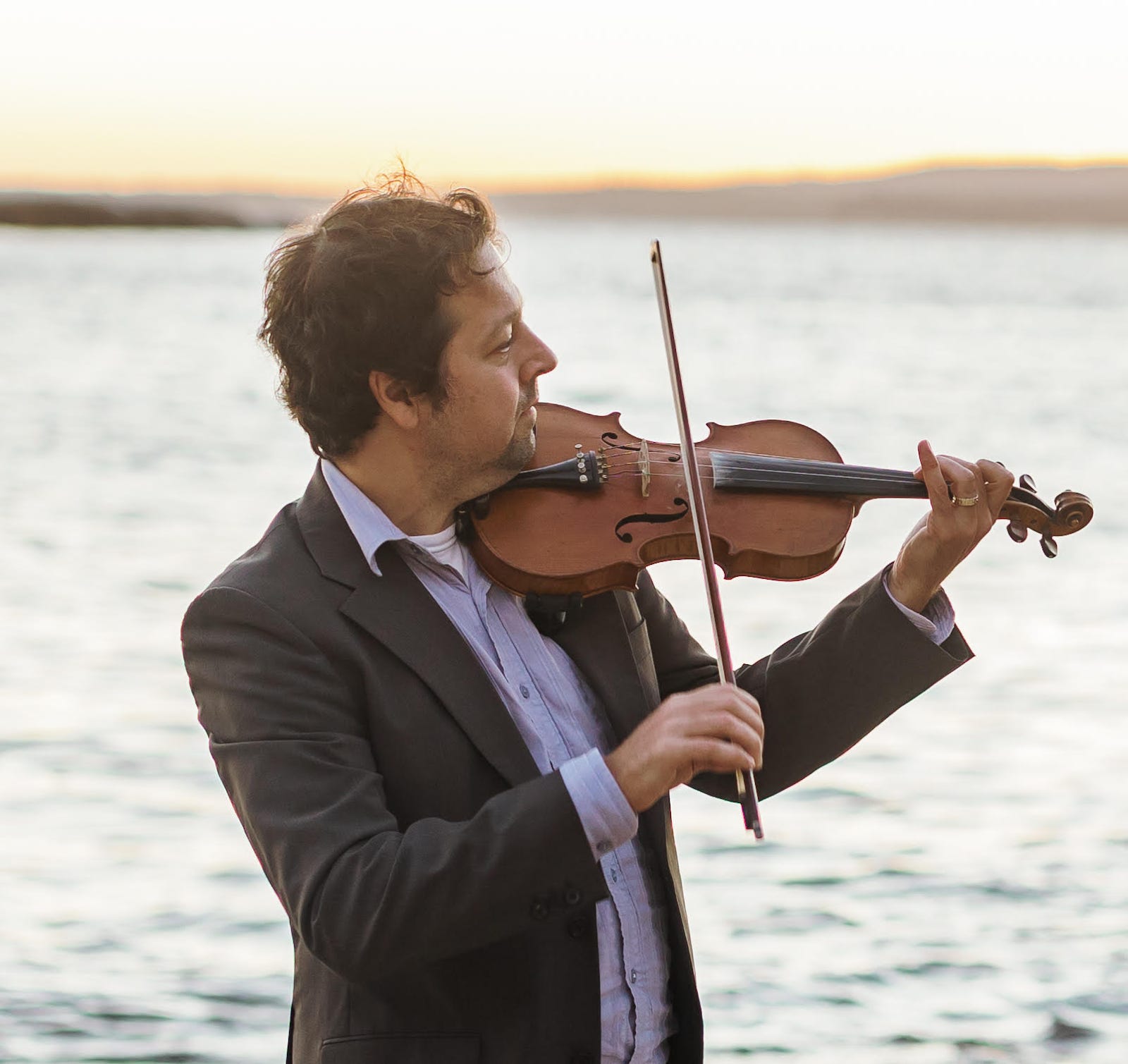
Jeremy Finney is an Irish-style fiddler and Feis musician from Halifax. He is an avid Irish traditional music enthusiast and multi-instrumentalist who loves nothing more than to share the music he loves with like-minded people. When he's not playing at an Irish session or providing the music for a Feis or a wedding, Jeremy performs regularly on stages around Nova Scotia and the maritimes, including Celtic Colours, the Rejigged Festival, Nova Scotia Music Week, the ECMAs and more.
We took time out from playing at a local Irish music session to discuss his career and traditional Irish Music:
Can you tell us a bit about your background and how you got into Irish music?
I’ve been playing violin since the age of five and was classically trained at that time. Strangely enough, from my mid-teens through the age of thirty, I stopped playing almost completely.
That’s really surprising! What made you put the instrument down?
(Remaining content available to paid subscribers first - Unlocks for everyone later)
Life got in the way. I got back into it around the time I moved to Halifax. I was looking for a way to meet people in my new town and stumbled on the Tuesday Session at the Old Triangle. I was blown away by the playing of Seph Peters and Renee Doucet. I thought I have to find out more about this.
There’s a great story about how you first joined that session. You wowed everyone by how well you played but they couldn’t understand the odd choice you made for tunes.
Oh yes! They were basically the first two tunes from O’Neill’s 1001 tunes (aka “Bible”).

I had been to the Halifax Folklore centre and asked the recently deceased Tom Dorward what was the book to read if I wanted to learn Irish fiddle music and he pointed me to that tune book. I didn’t have any real idea of how Irish music groups sets up tunes together yet and just thought I should start at page one and work my way through! I think the first tune was Doctor O’Neills, followed by Cherish the Ladies. Not exactly standard repertoire but I think I played them properly.
You’re being modest! By all accounts, you impressed everyone at that first playing. How did you find the adjustment of going to Irish trad after all the Classical training?
Remember I had left Classical for about fifteen years. So, in a way, it was a kind of a reset. In some ways, it meant an easier time getting back into playing. After a few weeks of intense practice, I became a “Session rat”, completely geeked out on it. Went to every session that was going back then. This was long before Covid, and there were a lot more sessions available. Hopefully it will come back but there is only one local establishment who will pay a session leader nowadays.
Beyond the local scene, what influences did you draw on for learning the tradition?
There is a world of stuff online now. I remember in 2011, around when I started learning in earnest,I started reaching for every recording I could find. One search I did was for champion Irish fiddlers. I found an obscure RTE (Irish national broadcaster) recording called Toss the Feathers (Dermot Crehan & Paul Honey). They took all 3 versions of Toss The Feathers and turned it into an interesting medley. It’s not a popular album but it opened my eyes to the kinds of creativity possible within the Irish music tradition.
I see you still have it on your phone! What other players inspired you?
From early on I grew to be a big fan of Liz Carroll.
She’s from Chicago, isn’t she?
Yes, also inspired by the tradition established by O’Neill. I broadened my range from there. Listening to bigger names like Bothy band, Dervish and so on. I was working from home full time, so I would have albums playing in the background constantly. I’m a firm believer in impulse driven practice. I have a fiddle on a hook on the wall. Whenever I was taking a break, or between meetings, I would pull it down and play a tune.
That’s great advice. How many tunes would you say you know now?
Hard to say but I suppose it’s over a thousand by now.
So you did learn the 1001 tunes! Any favourite out of them all?
There’s a G minor hornpipe called the Drunken Sailor that’s an enduring favourite. I particularly like the way Liz Carroll plays it. On the surface you can hear a sailor stumbling down the street. But there’s also a darkness to it, which undercuts the melody.
You write your own tunes, too. How did that come about?
I didn’t write much at all until I started working on the first album. (Tip the Bottle - Album by Jeremy Finney | Spotify - 2018) I’ve always wanted to do things differently. Some people want to write tunes early on but I wanted to really immerse myself in the tradition first. One thing that helped me write was to choose a less familiar instrument and turn my mistakes playing into quirky melodic themes for new tunes. .
What instrument? I know you play concertina and bouzouki as well.
I find the mandolin to be a challenge but it turns out I like capitalizing on the mistakes I make while playing it. What comes out often turns out to be more interesting than what I wanted to play and becomes the kernel of a tune. I’m still writing regularly.
Any new album in the works?
Yes! I’m working on a joint album with Andy Webster as a new duo we call The Bright and the Blinding. We were all this afternoon recording it in a studio I’ve built out in my basement. It draws on the songs from Andy’s Scottish repertoire but also has lots of Irish tunes, for example Green Grow the Rashes with The Wedding Reel and Limerick Lasses. We’re thinking of it as a fusion of Scottish and Irish in Canada. There’s even a little classical! Four part harmonies with strings.
That sounds amazing! How much would be songs versus instrumental?
It’s a bit early to say but we’re trying to keep it evenly balanced. We even plan to integrate both in a novel way on a couple of tracks, breaking the common arrangement format of tunes during breaks between verses and choruses. It’s fun to do things differently.
I remember for Tip the Bottle, you even recorded a gang of us playing at the old Lion’s Head tavern.
That’s right. I wanted to capture the grassroots enthusiasm that’s a big part of the Halifax Irish music scene. That genuine local interest. I do feel we could be doing more to encourage young players. I.e. give them a path to success. For the more advanced players, there used to be an opportunity on Thursday nights at Durty Nellys to play in front of a big audience but that’s no longer there. If we had something like a Comhaltas (International Irish music and culture organization) it could foster that. Several local music schools have taken the lead on introducing their students to Irish traditional music. If there was a coordinated effort between them to learn the same repertoire, and perhaps form a regular youth session collectively, it might lead to even greater enthusiasm for this wonderful music. Our community relies mostly on imported players to sustain the Irish trad scene, and it would be great to have a strong and productive youth development initiative to help get them hooked for life! There’s great potential there.
Any final advice for aspiring young players?
A highlight for me was that rush I got the first time I joined a session with really skilled players. It really motivated me to keep on this path. My advice would be to keep going to sessions and listening and practising it at home. It’s so easy nowadays with online resources like Youtube, Tunepal, Spotify etc. There’s a session on Sundays 4-6 at Durty Nelly’s and Wednesdays 8pm at the Oxford Taproom. Just come out!